
Career Path
ML Engineer
Trains, tunes and deploys machine learning models, and keeps them fast and reliable.
- 157 Free Lessons
- 15 Seasons
- 10 Interview Questions
 Written and reviewed by Parham Akhlaghi, Founder and Course DirectorUpdated
What The Job Is
An ML engineer turns data into models that work outside a notebook: preparing features, training and tuning models, and packaging them so other systems can call them.
Once a model is live, the job is to keep it fast and reliable: deploying it, watching its quality as the data changes, and retraining or optimizing it when it drifts.
At a Glance
- 6 of 157lessons out now
- 10interview questions
- 8key skills explained
Job Titles to Search
- Research Scientist
- Research Engineer
- Machine Learning Engineer
- Inference Engineer
Your First Lessons
The Job in Detail
Why Companies Hire for It
Many of the most valuable predictions in a business, such as fraud, demand, failures or churn, still come from models trained on the company's own data. Companies hire ML engineers because a model that works in a notebook is not yet useful: it must be trained on the right data, tested honestly, served quickly and watched so it stays accurate.
A Typical Week
- 1Prepare training data with the data team: cleaning it, labelling it and splitting it so tests are honest.
- 2Train and compare models, from gradient boosting to neural networks, and keep a record of every experiment.
- 3Package the best model so it can serve predictions in an application, fast enough and cheap enough.
- 4Monitor models in production for drift, when the data changes and accuracy quietly drops.
- 5Fine tune an existing model on company data when a general model is not good enough.
Tools and Terms You Will Meet
- scikit-learn
- The standard Python library for classical machine learning.
- PyTorch
- The most used framework for building and training neural networks.
- MLflow
- A tool to track experiments, models and their versions.
- Feature store
- A shared place for the inputs models use, so training and serving match.
- Model serving
- Running a trained model behind an API so applications can use it.
Who Moves Into This Job
ML engineers often come from data science, software engineering or a quantitative degree such as engineering, physics or statistics. What they share is comfort with Python, data and the basics of probability and linear algebra. Many start as data scientists and move closer to production, or as software engineers who learn how models are trained.
Industry Example: Pharma
In pharma, ML engineers build models that predict which production batch may fail, flag unusual readings from manufacturing sensors, forecast supply and demand, and score molecules or patients for further study. Models used in regulated work need documented training data, versioned code and monitoring that a quality team can review.
A Common Mix-Up
ML engineering is not the same as AI engineering. An AI engineer builds products on models that already exist, mostly language models; an ML engineer trains and tunes models and makes them work in production. The two jobs overlap more every year, but the daily work differs.
Is This Job for You?
A good fit if
- You like data and experiments, and making a model measurably better.
- You enjoy both the math behind models and the code that runs them.
- You are patient: training and testing take many rounds.
Maybe not if
- You want to build user facing features every week.
- You find statistics and model evaluation tedious.
- You prefer working with people and clients to working with data.
Where the Job Leads
ML engineers grow into senior ML engineer and staff roles, MLOps and platform roles, or applied research. Some become technical leads for a model area, such as recommendations or forecasting, or move into AI architecture.
How to Get In
- 1Learn Python, pandas, statistics and the core ideas of machine learning, then scikit-learn.
- 2Train a model on a public dataset end to end, and explain how you tested it honestly.
- 3Deploy one model behind an API and add simple monitoring, then show the whole project on GitHub.
What Employers Ask For
Real lines from real job ads for this role, each with the lesson that teaches it.
GSK
AIML Software Engineer, AI for Science, London
Basic understanding of at least one major deep learning framework (PyTorch, JAX, TensorFlow).
Taught InS7 · #74PyTorch Fundamentals
Doctolib
Senior AI Engineer - Patient Health Platform, Paris
Have exposure to learning-to-rank or feature engineering
Taught InS6 · #66Features and Pipelines
Sanofi
Data & AI Engineer (Digital R&D), Paris
Familiarity with containerization (Docker) and container orchestration (Kubernetes/Openshift a plus)
Taught InS12 · #141Kubernetes Fundamentals
Technergetics
AI/ML Engineer III, Rome, NY
Ability to design and run LLM evaluation, including task-specific benchmarks, golden datasets, LLM-as-judge methods, and tracing and observability tooling (LangSmith, Langfuse, Arize, Weights & Biases)
Taught InS13 · #154Observability and Tracing
Skills Checklist
The skills this role is hired for, each with the free lesson that teaches it.
- 01
Python, NumPy and pandas
S4 · #48pandas
- 02
Classical machine learning with scikit-learn
S6 · #66Features and Pipelines
What is Machine Learning? - 03
Model evaluation and metrics
S6 · #65Evaluating Models
- 04
Deep learning with PyTorch
S7 · #75Training Loop in PyTorch
What is Deep Learning? - 05
Experiment tracking with MLflow
S6 · #71Experiment Tracking
- 06
Fine-tuning with LoRA
S15 · #176LoRA and QLoRA
What is Fine-Tuning? - 07
Model serving and inference optimization
S12 · #149Serving Models at Scale
- 08
Production monitoring and drift
S13 · #155Production Monitoring
What is MLOps?
Your Path
Every lesson of this path, season by season. Published lessons open their page.
Season 0: Start Here
8 Lessons- S0 · #1Learn AI to Get Hired: The Full MapLive
- S0 · #2What AI Really Is: AI vs Machine Learning vs LLMsLive
- S0 · #3AI Jobs Explained: Which Role Fits You?Live
- S0 · #4Why Code Isn't the Hard Part AnymoreLive
- S0 · #5Escape Tutorial Hell: Learn by BuildingLive
- S0 · #6AI Assistants for Learners: Catch the MistakesLive
- S0 · #7Prompting from Zero: Get Better Answers
- S0 · #8Tokens, Context Windows and Model Families
- S1 · #9How a Computer Works
- S1 · #10Operating Systems
- S1 · #11Files, Folders, Paths, Formats
- S1 · #12The Command Line From Zero
- S1 · #13Linux Essentials
- S1 · #14How the Internet Works
- S1 · #15HTTP From Zero
- S1 · #16JSON and YAML
- S1 · #17Your Code Editor
Season 2: Python
17 Lessons- S2 · #18Install Python, First Script
- S2 · #19Variables, Types, Operators
- S2 · #20Strings and f-strings
- S2 · #21Lists, Dicts, Tuples, Sets
- S2 · #22Conditionals and Loops
- S2 · #23Functions
- S2 · #24File I/O and Parsing
- S2 · #25Errors and Exceptions
- S2 · #26Modules, Packages, Dependencies
- S2 · #27Classes and Objects
- S2 · #28Type Hints and Pydantic
- S2 · #29Reading Code You Didn't Write
- S2 · #30Calling Web APIs in Python
- S2 · #31Async Python
- S2 · #32High-Concurrency Python
- S2 · #33Testing With pytest
- S2 · #34Mini-Project: A CLI Tool
Season 3: Git and GitHub
6 Lessons- S3 · #35Version Control and Git
- S3 · #36Branches and Merges
- S3 · #37GitHub
- S3 · #38Pull Requests and Code Review
- S3 · #39CI/CD Introduction
- S3 · #40A Portfolio-Grade Repo
Season 4: Data Foundations
15 Lessons- S4 · #41What Data Is
- S4 · #42SQL 1
- S4 · #43SQL 2
- S4 · #44SQL 3
- S4 · #45Database Design and PostgreSQL
- S4 · #46Python Meets SQL
- S4 · #47NumPy
- S4 · #48pandas
- S4 · #49Data Visualization
- S4 · #50Business Intelligence and Data Storytelling
- S4 · #51NoSQL
- S4 · #52Data Engineering Basics
- S4 · #53The Modern Data Stack
- S4 · #54Data Governance and Master Data Management
- S4 · #55Ingesting Messy Documents
Season 5: Math for AI
6 Lessons- S5 · #56Vectors and Matrices
- S5 · #57Dot Product and Cosine Similarity
- S5 · #58Probability and Statistics
- S5 · #59Derivatives and Gradients
- S5 · #60Gradient Descent
- S5 · #61Loss, Softmax, Cross-Entropy
Season 6: Classical Machine Learning
11 Lessons- S6 · #62What Machine Learning Is
- S6 · #63First Model With scikit-learn
- S6 · #64Classification
- S6 · #65Evaluating Models
- S6 · #66Features and Pipelines
- S6 · #67Trees and Boosting
- S6 · #68Clustering and Dimensionality Reduction
- S6 · #69Time Series and Anomaly Detection
- S6 · #70Optimization and Simulation
- S6 · #71Experiment Tracking
- S6 · #72Project: Predictive Maintenance
Season 7: Deep Learning and Transformers
10 Lessons- S7 · #73A Neural Network From Scratch
- S7 · #74PyTorch Fundamentals
- S7 · #75Training Loop in PyTorch
- S7 · #76TensorFlow and Keras
- S7 · #77CNNs and Computer Vision
- S7 · #78NLP Foundations
- S7 · #79From RNNs to Attention
- S7 · #80Transformers Explained
- S7 · #81Tokenization Deep Dive
- S7 · #82How LLMs Are Made
Season 8: Harnessing Models (CAM)
14 Lessons- S8 · #83Hugging Face Hub
- S8 · #84Running Pretrained Models
- S8 · #85Hardware Realities
- S8 · #86Open Models on Your Own Machine
- S8 · #87The OpenAI API
- S8 · #88The Anthropic API
- S8 · #89Controlling Generation
- S8 · #90Production-Grade Calls
- S8 · #91Project: The Summarizer
- S8 · #92Prompt Engineering Properly
- S8 · #93Context Engineering
- S8 · #94Structured Outputs
- S8 · #95Multimodal APIs
- S8 · #96Going Provider-Agnostic
Season 9: Embeddings, RAG and Search
13 Lessons- S9 · #97Why AI Hallucinates, and How RAG Reduces It
- S9 · #98Embeddings
- S9 · #99Vector Search
- S9 · #100Vector Databases
- S9 · #101RAG From Scratch, No Framework
- S9 · #102Chunking Strategies
- S9 · #103Better Retrieval
- S9 · #104Grounding and Citations
- S9 · #106Advanced RAG
- S9 · #108Building an Enterprise Knowledge Base
- S9 · #109Search and Recommendation Systems
- S9 · #110Semantic Caching
- S9 · #112Project: HR Policy Assistant
- S11 · #129FastAPI
Season 12: Deployment and Cloud
13 Lessons- S12 · #138Cloud Fundamentals
- S12 · #139Docker 1
- S12 · #140Docker 2
- S12 · #141Kubernetes Fundamentals
- S12 · #142AWS for AI
- S12 · #143GCP for AI
- S12 · #144Microsoft Azure for AI
- S12 · #145Enterprise Data and AI Platforms
- S12 · #146Sovereign AI and Deployment Choices
- S12 · #147Infrastructure as Code
- S12 · #148Full CI/CD
- S12 · #149Serving Models at Scale
- S12 · #150Project: Deploy the RAG App
- S13 · #151Why Evaluation
- S13 · #152Evaluation Methods
- S13 · #153Evaluating Agents
- S13 · #154Observability and Tracing
- S13 · #155Production Monitoring
- S13 · #156Product Analytics
- S13 · #157Cost Governance
- S13 · #158AI Gateways
- S13 · #159MLOps, LLMOps, AgentOps
- S13 · #160Batch Processing
- S13 · #161Auditing AI You Didn't Build
- S15 · #174Prompting vs RAG vs Fine-Tuning
- S15 · #175Preparing Fine-Tuning Data
- S15 · #176LoRA and QLoRA
- S15 · #177Preference Tuning
- S15 · #178Model Optimization
- S15 · #179Small Models and Edge AI
- S15 · #180Training at Scale
- S15 · #181The Advanced ML Toolbox
- S15 · #182Scientific AI
- S15 · #183Build an LLM From Scratch 1
- S15 · #184Build an LLM From Scratch 2
- S15 · #185Reading AI Papers
Season 17: Getting Hired
11 Lessons- S17 · #211Choose Your AI Role: Decode Any Job Ad
- S17 · #212Portfolio Project 1: Deployed RAG Knowledge System
- S17 · #215Capstone: Enterprise RAG
- S17 · #217Your AI CV
- S17 · #218Build in Public
- S17 · #219Networking
- S17 · #220Certifications Worth Your Time
- S17 · #221System Design Interviews
- S17 · #222Coding Interviews in the AI Era
- S17 · #223Case Study and Business Case Interviews
- S17 · #224Behavioral Interviews and Negotiation
The Books Behind This Path
The lessons on this path were researched from these books. Read them to go deeper:
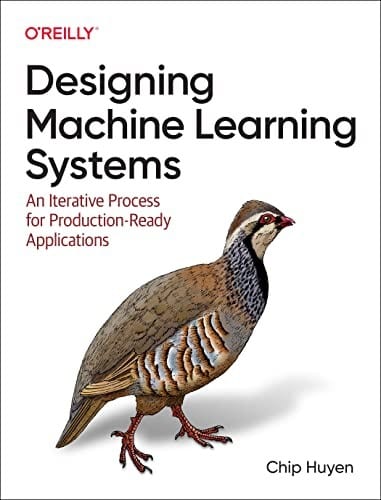
Designing Machine Learning Systems
Chip Huyen, O'Reilly, 2022
Seasons 0, 4, 6, 13 and 15. Cited in AI Jobs Explained: Which Role Fits You?, Why Code Isn't the Hard Part Anymore
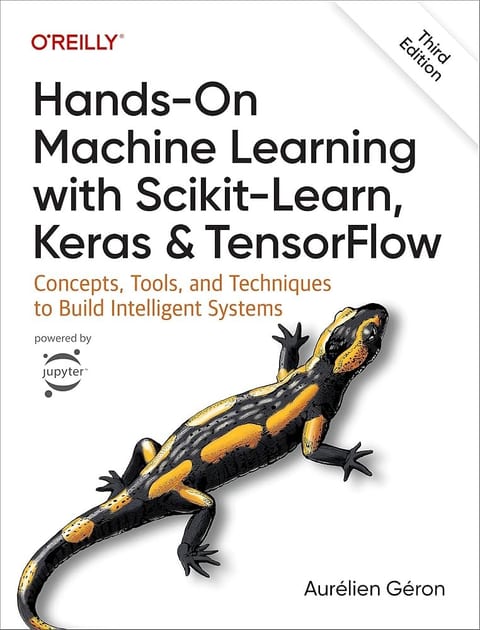
Hands-On Machine Learning with Scikit-Learn, Keras and TensorFlow
Aurélien Géron, 3rd edition, O'Reilly, 2023
Seasons 0, 6 and 7. Cited in What AI Really Is: AI vs Machine Learning vs LLMs
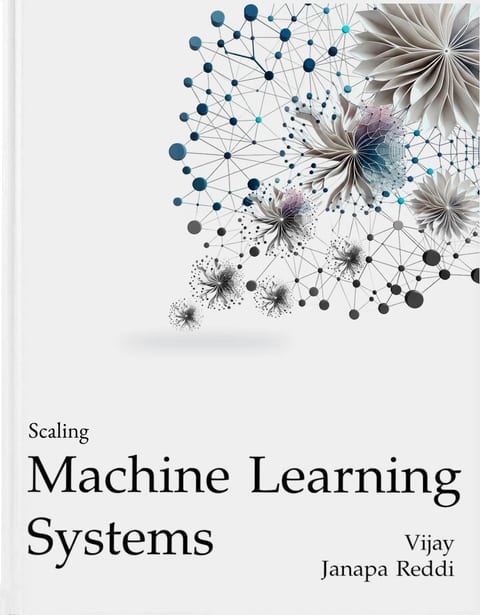
Machine Learning Systems
Vijay Janapa Reddi, Harvard University, 2025
Seasons 12, 13 and 15
Free Official Copy
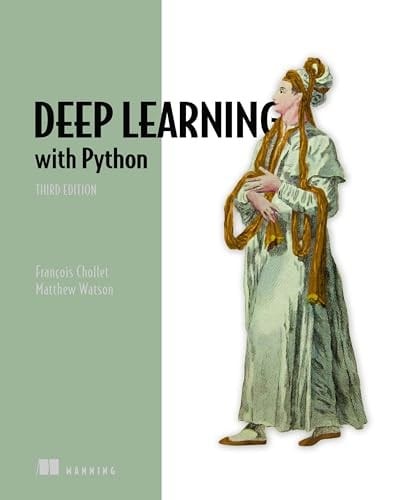
Deep Learning with Python
François Chollet and Matthew Watson, 3rd edition, Manning, 2025
Seasons 6, 7, 12 and 15
Related Paths
The paths that share the most lessons with this one.
Compare:AI Engineer vs ML EngineerML Engineer vs MLOps Engineer
Never Miss a Lesson
Subscribe on YouTube, or get an email the day each new lesson goes live.